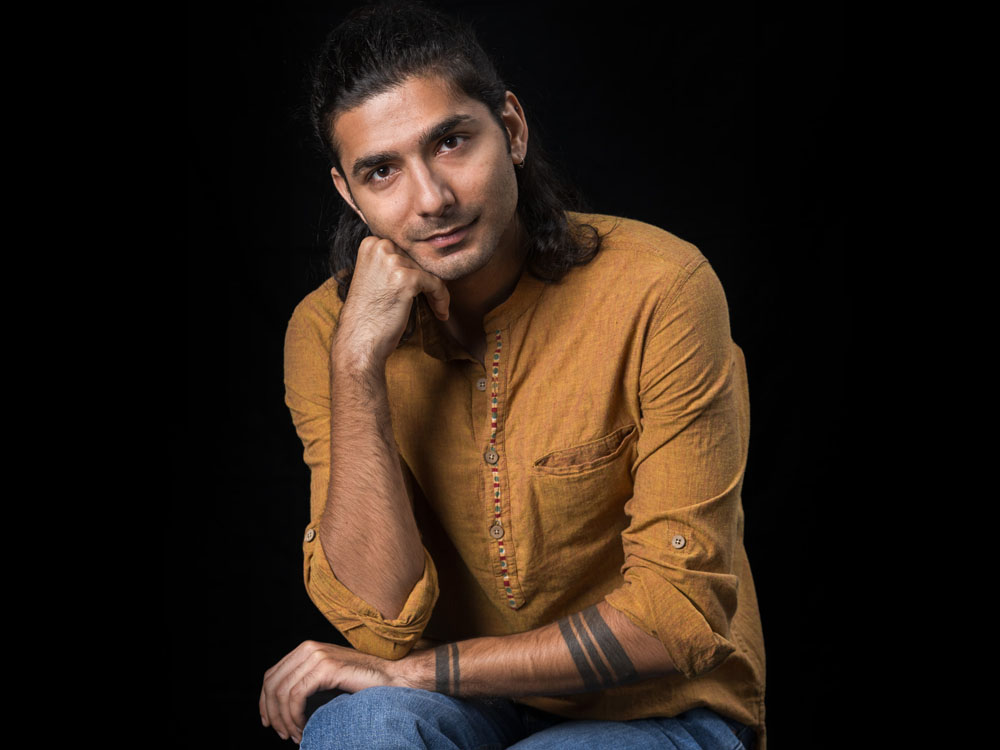
Kunal Dara is an actor from New Delhi, India, whose journey into theatre began with skipping college to immerse himself in the world of performance —playing theatre games, exploring the space, and sometimes, just being present. Over the years, he has been part of the LTG Repertory Company and collaborated with various theatre groups across Delhi as a freelance artist.
Before joining ITI, Kunal was a core member of Mrit Pathshala (The Dead School), where he performed for over a year. Notable works include King Lear, The Other Half, Kala Yug, Maya, and Andorra. Beyond performance, he has used devising as a tool to engage with underprivileged children and domestic workers on workplace and home safety, collaborating with the Martha Farrell Foundation (MFF).
Looking ahead, Kunal envisions a future of performing and travelling. Eventually, he hopes to cross disciplines and create his own unique body of work, blending different artistic forms and perspectives.
Kunal is a recipient of the Tan Chay Bing Education Fund Scholarship and a beneficiary of the Möbius Fund, a revolving loan fund for actor-students.
What is it like to train here at ITI?
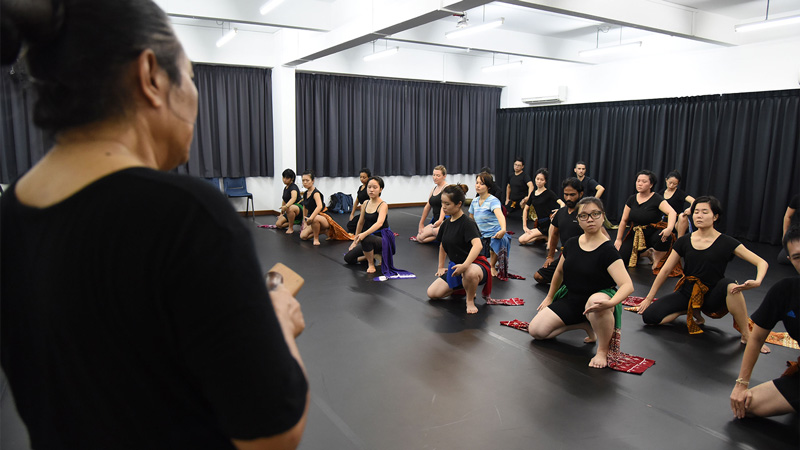
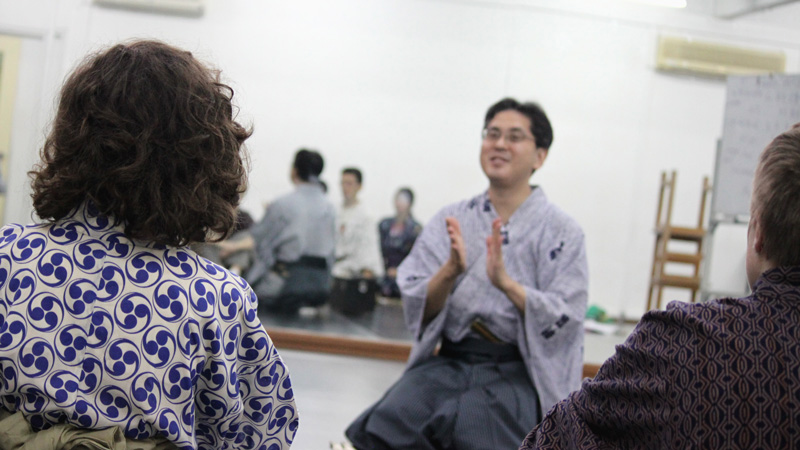
Training at ITI has been incredible. What really defined the experience for me was working so closely with people from many different cultures, languages, and artistic traditions. You can’t stay inside your own habits here; you’re constantly learning how to negotiate space, how to listen differently, how to adapt, and how to honour multiple ways of working. For me, that kind of training goes beyond technique. It shapes how you see the world. It made me more open, more curious, and more aware of how art is built through relationships. That's been the most transformative part of being at ITI.
Think back to your first day here, and now as we approach your last few weeks. What are some of the thoughts and emotions that come up?
Thinking back to the first day, I remember feeling nervous and pretty under-confident. I wasn’t sure if I belonged here or if I could keep up with everyone. But over time, through the training and the people around me, those feelings shifted. Now, as we’re approaching the last few weeks, I'm still nervous — but it's a very different kind of nervous. It's paired with a sense of confidence I didn't have before.

Tell us how you first came to know about ITI. What made you choose this school over others?
I first heard about ITI through a friend I met during Ariane Mnouchkine’s workshop in Pondicherry. What really drew me in were the traditional forms. And alongside that, the rigorous approach to training felt very different from other schools I looked at.
What were you doing before coming to ITI?
Before coming to ITI, I was working with different theatre collectives, teaching children, and collaborating with NGOs on theatre-in-education programmes.
How does training in traditional performance forms have relevance in contemporary practice?
Training in traditional forms gives you a strong foundation. These forms teach precision and presence, which can be applied to any contemporary work. Even if the style looks different, the skills and awareness you gain make your modern practice richer, clearer, and more grounded.
It's challenging, exhausting, and magical all at once. You’ll stumble, you’ll grow, and you’ll thank yourself later.
How has what you’ve learnt here shaped or changed you as an actor and as a person?
Training here has made me more present, more patient. As an actor, I've learned to trust my body and my instincts, and found ease. As a person, I've learned to listen and adapt – and how to survive long days only on coffee!
Describe your biggest takeaway from the ITI experience.
Discipline and consistency.
What are your plans after graduation?
No elaborate plans. To travel and find opportunities to make money.
What would you say to a new student or someone thinking of joining ITI?
Jump in. It's challenging, exhausting, and magical all at once. You’ll stumble, you’ll grow, and you’ll thank yourself later.
Any special thanks or message?
Teachers are the biggest support. They somehow make you believe in yourself even when you don’t. I thank them for their generosity and ever-giving nature.
And it wouldn’t have been possible without the benefactors and funders who make this training accessible. A huge thanks to them for supporting us and believing in the arts. Their support truly makes all of this special.


Profile photo and Othello production photo by Joseph Nair


UEN Charity/PEI Registration No: 200818680E | Registration Period 13 Jul 2024 to 12 Jul 2028
Intercultural Theatre Institute Ltd is supported by the National Arts Council for the period from 1 Oct 2025 to 31 Mar 2026.
This website is hosted by APC Hosting.

© 2026 Intercultural Theatre Institute. All rights reserved. | Disclaimer | Privacy | Sitemap