Creating a manifesto on the arts
23 Mar 2013
'Some members of the Singapore arts community are mooting an Arts Manifesto to set out the broad principles and values that they consider are important to the arts.
The manifesto is currently still in its early stage but there are several key statements that have been put forward for consideration, such as: Do not attempt to define art; Art unifies and divides; Art is about possibilities; Art can be challenged but not censored; Art is political.
The key people behind the manifesto include theatre practitioners Alvin Tan, Kok Heng Leun, Kuo Jian Hong, Tay Tong and [ITI Director] T. Sasitharan, playwright [and ITI Board Member] Tan Tarn How, academic Terence Chong, Arts Nominated Member of Parliament (NMP) Janice Koh, film-maker Jasmine Ng, arts lecturer Audrey Wong and poet Alvin Pang. They met twice last month to come up with a framework for the manifesto.
They are all members of ArtsEngage, a group of artists, arts managers and observers interested in cultural policy issues. The group presented the Government's censorship review committee with a paper pushing for a more impartial and open advisory and rating system in 2010, and held a discussion on street art, vandalism and the limits of artistic licence last year after the arrest of graffiti artist Samantha Lo.
The group intends to present the manifesto to the public and the Government at a press conference next month, and members of the public and the arts community who agree with the manifesto will be asked to sign an online petition in support of it.
Playwright Tan Tarn How, 52, says: "This is an extension of the work we've done as ArtsEngage. At no time do we claim to represent all artists - we represent whoever wants to be represented. Other artists may not care about it or disagree, but we are just making the claim to say that this is what it is." He adds that while the manifesto is not enforceable, the group hopes that it will give the public pause as it reflects on why the arts and culture are important. "What we've noticed from discourse and policies in general, and with the National Conversation in particular, is that people tend to focus on the very material and everyday things rather than on what we think is of fundamental importance - about love for family and friends, the freedom to do what we want to do, and affirming ourselves as human beings through arts and culture.
"(Arts and culture) have always been peripheral. That's a fundamental problem in perception that I think policy-makers have pushed in their economy-centric planning and policy-making."
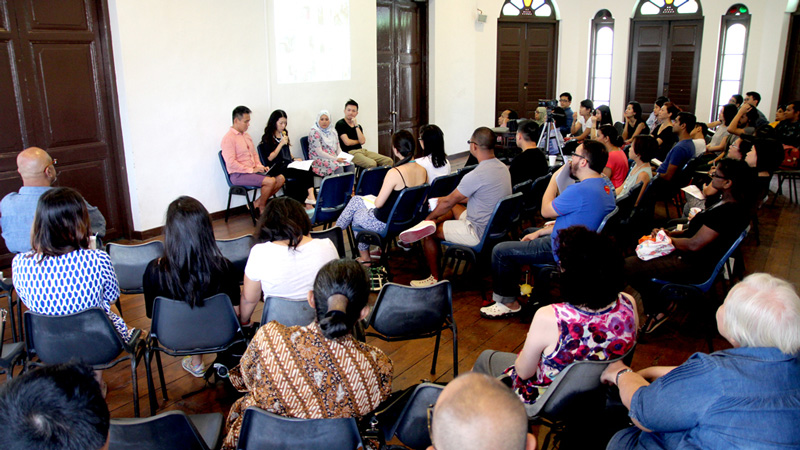
Last Sunday, about 30 arts lovers and practitioners gathered at the arts centre Emily Hill to discuss the first draft of the manifesto and offer suggestions and opinions.'
- AsiaOne
View article